Step-by-Step Guide How to Mine Bitcoin on Mobile for Complete Beginners

Bitcoin mining has traditionally been associated with powerful desktop computers and expensive ASIC hardware. However, with the rise of mobile technology, many beginners wonder if it is possible to mine Bitcoin directly from a smartphone. While mobile mining cannot compete with industrial-scale operations, it offers an accessible entry point for learning and small-scale participation. This guide explains the basics of mobile Bitcoin mining for absolute beginners.
First, it is important to understand that true Bitcoin mining—solving complex cryptographic puzzles to validate transactions—requires massive computational power. Smartphones lack the processing capacity to mine Bitcoin directly. Instead, most mobile mining apps allow users to mine alternative cryptocurrencies (altcoins) that are easier to compute, which are then automatically converted into Bitcoin. Alternatively, some apps provide cloud mining services, where users rent hashing power from remote data centers.
To start, choose a reputable mobile mining app. Popular options include “CryptoTab Browser,” which mines Bitcoin in the background while you browse the web, and “MinerGate,” a mobile mining pool that supports multiple coins. Always verify the app’s legitimacy by checking user reviews, privacy policies, and withdrawal thresholds. Avoid apps that demand upfront payments or promise unrealistic returns.
After selecting an app, create an account and set up a Bitcoin wallet. Your wallet will receive the mined Bitcoin payouts. Many mobile wallets like “Trust Wallet” or “Coinbase Wallet” are free and easy to use. Copy your wallet address, as you will need to enter it into the mining app’s withdrawal settings.
Next, install the mining app from an official app store (Google Play or Apple App Store). Be cautious of third-party downloads. Once installed, allow the necessary permissions (such as background activity) and start the mining process. Most apps have a simple “Start Mining” button. Remember that mining drains your phone’s battery and generates heat, so it is advisable to charge your phone and avoid covering it during operation.
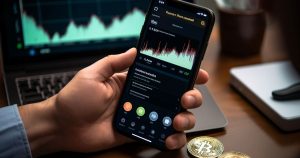
For the best beginner experience, join a mining pool. Pools combine the computing power of many users to increase the chance of earning rewards, which are then split among participants. Apps like “MinerGate” automatically connect you to a pool. You will see your earnings accumulate slowly in the app’s dashboard.
Be realistic about earnings. Mobile mining yields very small amounts—often only a few cents per week. It is not a way to get rich, but it can be a fun educational tool. Also, consider the electricity cost and phone wear and tear. Some users prefer “cloud mining” apps that allow you to buy a small contract and earn Bitcoin without using your phone’s resources, though these carry higher risk.
Security is crucial. Never share your private keys or wallet credentials. Use two-factor authentication (2FA) on your mining account. Avoid apps that ask for excessive permissions, such as access to your contacts or SMS. Stick to well-known platforms with transparent payout histories.
Finally, monitor your progress. Most apps provide real-time hashrate and earnings data. Withdraw your Bitcoin once you reach the minimum payout threshold (typically around 0.0001 BTC). Transfer it to your personal wallet for safekeeping. As you gain experience, you can explore more advanced options like mining pools for Litecoin or Dogecoin and then converting them to Bitcoin.
In summary, mobile Bitcoin mining for beginners is less about generating profit and more about understanding blockchain technology. It offers a low-barrier entry to the crypto world. Always start with small, reputable apps, manage your expectations, and prioritize security. While you may never mine a full Bitcoin on your phone, you will gain valuable knowledge that can help you in future cryptocurrency endeavors.